Friday, October 04, 2002


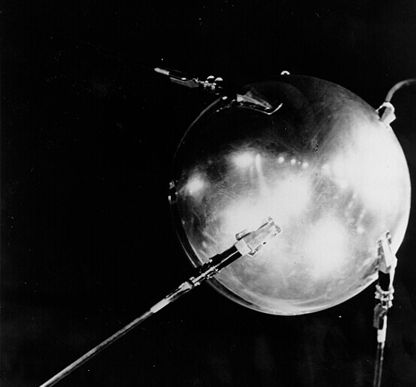
The Space Age began 45 years ago today, with the launching of Sputnik. NPR observed the event with this essay by Walter Cronkite.

Way to go, Spre!!

One nice thing about karma is the way it sometimes takes years to roll around, but roll it almost always does. I've never liked Sprewell, not since his attack on PJ Carlesimo. I'll never forget a call-in sports show I listened to shortly after that incident, where the guest was some sportswriter who kept insisting that what Sprewell did wasn't that bad, and in America everybody gets a second chance. One caller said that Sprewell should be expelled from the sport for life (which I still think should have happened), and the sportswriter angrily demanded if he though Sprewell should never get a second chance. The caller snapped back, "In any other line of work he'd be charged with assault." The sportswriter actually sputtered for five seconds....

Thursday, October 03, 2002

The world's funniest joke

"A couple of New Jersey hunters are out in the woods when one of them falls to the ground. He doesn't seem to be breathing, his eyes are rolled back in his head.

"The other guy whips out his cell phone and calls the emergency services. He gasps to the operator: 'My friend is dead! What can I do?'

"The operator, in a calm soothing voice says: 'Just take it easy. I can help. First, let's make sure he's dead.'

"There is a silence, then a shot is heard. The guy's voice comes back on the line. He says: 'OK, now what?"'


C'mon admit it, you laughed or at least you sniggered a little bit.

Any way this joke was selected by two million people during an experiment called Laugh Lab and as we all know two million people can't be wrong. Highlights from the study include:

  • Germans were the most likely to find all types of jokes funny
  • Canadians were the least amused of the 10 top responding nations
  • The British, Irish, Australians and New Zealanders favored jokes involving wordplay
  • Continental Europeans liked jokes with a surreal bent.
  • Americans and Canadians preferred jokes invoking a strong sense of superiority -- either because a character looks stupid or is made to look stupid by someone else.


Now finally someone has been able to tell me the reason why I find most American comedy to be so lame i.e. there's just not enough word play and it has a generally really sucky attitude (that's a joke son)

Phases of the Moon

So you want to know the date of the next full moon? Click here.

To work out the phases of the moon for any month and year, you might like to try using this handy little form:

Enter the month:
Enter the year:


If you're a plaintiff in a lawsuit, and you can't locate the defendent, one possible solution is to place an ad in the classifieds asking the defendent to come forward.

Thus, we have the placement of this ad in the International Herald Tribune and Al-Quds Al-Arabi, a London-based Arabic newspaper:


Apparently there is a real, legal reason for doing this as opposed to simply hoping that Bin Laden will show up for court. But I don't know, it still seems...strange.

Wednesday, October 02, 2002

Arctic Europa

from PHYSICS NEWS UPDATE
The American Institute of Physics Bulletin of Physics News
Number 607 October 2, 2002 by Phillip F. Schewe, Ben Stein, and James Riordon

Modeling of tidal processes on Europa, making use of observations recorded with the Galileo spacecraft, suggest that water could surge near the surface. This water would originate in the ocean thought to reside beneath the icy surface layer on Europa and well up in cracks caused by Europa's ongoing tidal battle with Jupiter. Thus the cracks might afford an avenue for an exchange of material and liquid between ocean and surface. According to Richard Greenberg(University of Arizona, greenberg@lpl.arizona.edu), if living organisms existed at Europa they might be able to survive as close as a few tens of centimeters from the surface especially if they live in a crack where they could be bathed daily by water delivered by tides. Exploring for such biological samples would not then require deep drilling. The nearness of water on Europa would therefore be more like that in Earth's Arctic basin, with ocean lying beneath riven and relatively thin ice sheets, rather than the Antarctic, where lake water is surmounted by kilometers-thick glacier. (Greenberg et al., Reviews of Geophysics, 6 September 2002.)


But what does it matter if we know our First Amendment rights or not if they don't mean anything?

Two Diamondback (Univ. of Maryland student newspaper)reporters covering the IMF-World Bank protests were arrested Friday morning and manacled for 23 hours. Surrounded by hundreds of protesters in Pershing Park, Washington Metropolitan Police circled and arrested the entire group. Jason Flanagan and Debra Kahn were there as impartial observers, and despite the newspaper's efforts to release them, they were stripped of all their possessions - even their shoelaces. What follows is a first-person account of their arrest and detention.

Tuesday, October 01, 2002

I love Gregg Easterbrook's "Tuesday Morning Quarterback" columns for ESPN.com. In this week's installment, he had some readers use translation programs to translate football slogans and cliches into other languages and then back into English, with hilarious results. What follows is the translation, into Japanese and back, of the "Win one for the Gipper" speech from that Ronald Reagan movie.

The Original:

"Rock, sometime, when the team is up against it -- and the breaks are beating the boys -- tell them to go out there with all they got and win just one for the Gipper. I don't know where I'll be then, Rock, but I'll know about it -- and I'll be happy."


Into Japanese and Back Into English:

"With victory for the Gipper in order, all things which one are obtained exactly to go out there the team it confronts that, it is broken, the eye when having struck in those which say the boy, the stone, once upon a time. I the stone do not know somewhere then it is but, you know concerning that, it is happy."


Heard this 10 or so days ago on NPR: the director of The First Amendment Center talking about their 'State of the First Amendment' survey.

Without Google (or similar aid), how many rights are protected in the First Amendment? Can you name them?

I'd love for you to post your answers here under comments before you go check out the Press Release.

49% of those surveyed said the First Amendment goes too far, and their number one public enemy is the press.

I really find this hard to believe. Sure, a lot of press might be stupid, but too free? I'm still astounded.


According to some researchers who used forensics analysis techniques, this is what King Tut looked like. (On a personal note, I was lucky enough to get to see the treasures from King Tut's tomb when they toured the United States in 1976. Of course, I was only five and had no idea of the significance, but I can remember some of those items to this day.)

Monday, September 30, 2002


My wife, Janet, and I, on occasion, drive down the New Jersey Turnpike through a section of oil refineries where the tortured geometry of the structures stands against the sky, and where waste gases burn off in eternal flames, and where a stench reaches us that forces us to close the car windows. As we approached it once, Janet rolled up the windows, sighed, and said, "Here comes Mordor."

--Isaac Asimov

"I think that New Jersey deserves the title, "Toll Booth Capital of the United States". You can't back out of your driveway in New Jersey without some schmuck in a hat wants fifty cents."

--George Carlin

Happy Birthday to that quintessential American roadway, the Jersey Turnpike, which is now 50. Listen to NPR's tribute here. It's been a long time since I rode the Jersey turnpike, and my memories are not particularly fond. But, a birthday is a birthday....

Collaboratory is one of the coolest community blogs ever.
Peter Horton
Septemeber 25th, 2002

Thanks, Peter.
Got a book in you? Keep it there!

Joseph Epstein, in this NY Times Op/Ed piece, cites a recent survey by a Michigan Publishing House that stated that 81% of US'ns feel they have a book in them, and that they should write it. Epstein then encourages people to do just the opposite. Looking at the possible reasons that people want to write books, namely a legacy, and the difficulty it is to actually write a book (and he doesn't even go into the difficulty of getting published), Epstein says that you shouldn't even try. I know we've got at least one aspiring writer on the collaboratory (Jaq). Any others? How does this influence or damage your aspirations? (via Arts and Letters Daily)

Sidenote: For an interesting look at the publishing world (along with a neat little mystery) check out James Michener's the Novel.

Friday, September 27, 2002

"It's different, but it's very pretty out here."

One night when I was six years old I was standing on the front porch with my father, we were both looking up at the moon. I should mention that this wasn't that boring sterile rock of a moon that these days rarely gets a moment of my attention. No, this was a brilliantly luminescent sphere that I remember as a kid spending countless evenings staring at with a toy telescope. It was the same moon that one day I knew I would visit.
The moon at the time was only about a quarter full but the night was a crystal clear winter's night in July so the crescent was brightly contrasted with the black sky behind it. Dad said: "Right now there are men walking around up there". I knew it too but just the thought of it was simply thrilling. Even at that age I knew that the moon landing was unprecedented, something totally new.

I guess that Apollo program in the end made the moon boring. What looked like the dawn of an exciting new era in space exploration ended up being just a high water mark before the malaise kicked in. No life was found there, just some rocks and then some more rocks. I remember watching the last of the Apollo 17 moon walks in 1972 on a TV set in the local shopping centre. Nobody was standing next to me watching it with me, no one could care less, they just got on with their Christmas shopping. As someone put it recently:

"We went to the moon. We drove a car around on the moon. We played golf on the moon. I think we've done everything practical we can with that useless rock."

Of course in reality they had a whole lot more fun than that! The transcripts of Apollo 11 landing and the moon walks make riveting reading. I mean it, go and immerse yourself, they're are really fascinating and the commentaries fill in the context as well as provide links to images and film clips. Transcripts of the other Apollo moon journals can be found here.

To be honest, I never could get very excited about the Space Shuttle. A space vehicle that could never leave the earth's orbit and was only meant for delivering new satellites or picking up old ones just wasn't space travel in my book. Its aims seemed so mercantile and mundane. It's one key feature, reusability, was something that only an accountant could really love. Instead my interest moved to the unmanned space probe flights which over the past 30 years have radioed back countless amazing pictures of the distant planets and their moons. But a Voyager or a Viking is just a camera tied on to a rocket, it's just not quite the same thing as having real people going out and doing real exploration.

In the three decades since the last person left it never to return, the moon has become remote once more. In a way, it seems more remote now than it ever was even before people started planning to go there.

Has the moon finally lost its power to inspire or is it just momentarily eclipsed? I'm not sure, the latter I hope but don't ask me. My three year old daughter has become a far better authority on the moon that me. She notices it even while it's become largely invisible to me. She knows when it's full and when it's a crescent. She points it out when it rises during the day. To her it's wonderful and interesting beyond measure and she reminds me how jaded I've really become. It is truly wonderful after all and this is definitely a good time for me to start looking up at the night sky once again.

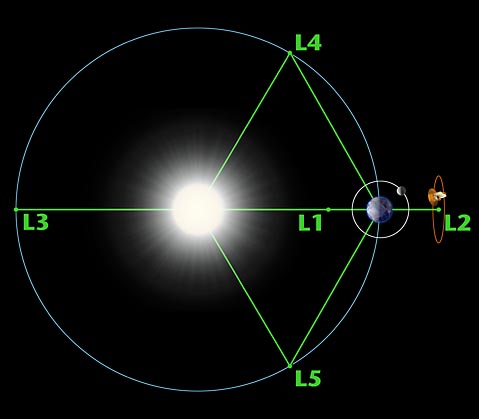
Sometime around April this year, the Earth aquired a new moon. Initially it was thought to be a stray asteroid that had been captured by the Earth's gravity. Now it appears to be the booster stage of a Saturn V rocket, Apollo 12 to be precise, which had been orbiting the sun since 1971. This year it crossed back over the L1 Lagrange point and started orbiting the earth once again. Apollo 12 was launched only four months after Apollo 11 and its return as a piece of space junk is kind of a fitting reminder of those moon flights thirty years ago. It makes me think that it's about time that we went back.

"Right now there are no people walking around up there"

Thursday, September 26, 2002

Dollar

Jachimov is a small Bohemian town in Joachimsthal, some 80km north of Plzen (Pilsen). In 1518 Count von Schlick was granted an imperial patent to mine silver there and to establish a mint. His silver coins were produced by Walzenwerke or 'rolling machines' and were formally classed as 'large groats'. Their popular name was the Joachimsthaler, soon shortened to thaler.

By the seventeenth century the thaler had become a unit of currency all over central Europe. It had been copied in Habsburg Spain, whose taleros or 'pieces of eight' circulated throughout the Americas. They were known in English as 'dollars'. The 30 shilling silver piece of James VI of Scotland was dubbed the 'Sword Dollar'. In the eighteenth century silver thalers were widely replaced by copper 'plate money' imported from Sweden, which acquired the Swedish name of daler. A copper daler of 1720 was equivalent in value to the silver thaler, even though its weight was 250 times greater; and it could only be transported by horse and cart.

The acknowledged masterpiece of the series, however, was the Maria Theresa dollar of 1751. This superb coin bore the bust of the Empress, with the two-headed eagle on the reverse, and the inscription: R[omae] IMP[eratrix] * HU[ngariae et] BO[hemiae] REG[ina] * M[aria] THERESIA * D[ei] G[ratia] ARCHID[ux] AUST[riae] DUX BURG[undiae] * COM[es] TUR[olis] * It continued to be minted in millions throughout the nineteenth century, all posthumous issues bearing the date of the Empress's death in 1780. It was minted by Mussolini in 1936 to finance the invasion of Abyssinia, and by the British in Bombay. Two hundred years later, it still circulates in parts of Asia as an international trade currency.

The dollar was adopted as the currency of the USA in 1787, and of Canada in 1871. But it figures no longer among the currency units of Europe.

from "Europe: A History" by Norman Davis
Note: german speakers pronounce "th" as "t"

Wednesday, September 25, 2002

Collapse: Why do civilizations fail?

What do you think, in response to this site or your own reflections?

A couple of pages in, toward the bottom, we find:

Every society must provide meaning and motivation to its members.

What society do you consider yourself to live in? How does that society provide meaning and motivation?
"I want to believe -- and I do believe -- that eventually people will see... that underneath this hair there is a brain, and underneath these big ol' boobs there's an even bigger heart."


So says Dolly Parton in a two-part interview she did on NPR's Morning Edition. I've always found Parton to be one of the more interesting figures in country music, a genre toward which I do not typically gravitate. She really is a fairly thoughtful individual, and quite talented. Links to the interview and some other Parton-related items (including a Real Audio version of her new cover of "Stairway to Heaven") can be found here.
According to AICN, Mel Gibson wants to make a film called The Passion, which would be a telling of Christ's last twelve hours. What makes this particular project intriguing is that Gibson apparently wants the film's dialogue to be spoken in Latin and Aramaic, and he doesn't want to subtitle it. That's one of the most audacious ideas for a film I've ever heard.

(EDIT: I suppose it would help if I actually link the AICN article, wouldn't it?)

Tuesday, September 24, 2002

A sharp distinction between ideas and thoughts is that thoughts are independent of persons: they can be apprehended by others as they are by me. Many people may apprehend the same thought, e.g. "This paper is white". However, thoughts are not wholly unlike ideas....


So wrote the great philosopher....Sean Meade!!!

(It's from a paper he wrote for the Existentialism class he and I took in college. It's amazing what you find when you move and finally open that dusty box in the cellar, the contents of which have not seen daylights since....1993? Wow!!)