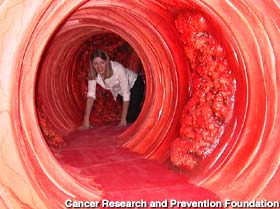
Wow. Wow, wow, wow.
(It's a dolphin.)


'TIME-TRAVELER' BUSTED FOR INSIDER TRADING
Wednesday March 19, 2003
By CHAD KULTGEN
NEW YORK -- Federal investigators have arrested an enigmatic Wall Street wiz on insider-trading charges -- and incredibly, he claims to be a time-traveler from the year 2256!
Sources at the Security and Exchange Commission confirm that 44-year-old Andrew Carlssin offered the bizarre explanation for his uncanny success in the stock market after being led off in handcuffs on January 28.
"We don't believe this guy's story -- he's either a lunatic or a pathological liar," says an SEC insider.
"But the fact is, with an initial investment of only $800, in two weeks' time he had a portfolio valued at over $350 million. Every trade he made capitalized on unexpected business developments, which simply can't be pure luck.
"The only way he could pull it off is with illegal inside information. He's going to sit in a jail cell on Rikers Island until he agrees to give up his sources."
The past year of nose-diving stock prices has left most investors crying in their beer. So when Carlssin made a flurry of 126 high-risk trades and came out the winner every time, it raised the eyebrows of Wall Street watchdogs.
"If a company's stock rose due to a merger or technological breakthrough that was supposed to be secret, Mr. Carlssin somehow knew about it in advance," says the SEC source close to the hush-hush, ongoing investigation.
When investigators hauled Carlssin in for questioning, they got more than they bargained for: A mind-boggling four-hour confession.
Carlssin declared that he had traveled back in time from over 200 years in the future, when it is common knowledge that our era experienced one of the worst stock plunges in history. Yet anyone armed with knowledge of the handful of stocks destined to go through the roof could make a fortune.
"It was just too tempting to resist," Carlssin allegedly said in his videotaped confession. "I had planned to make it look natural, you know, lose a little here and there so it doesn't look too perfect. But I just got caught in the moment."
In a bid for leniency, Carlssin has reportedly offered to divulge "historical facts" such as the whereabouts of Osama Bin Laden and a cure for AIDS.
All he wants is to be allowed to return to the future in his "time craft."
However, he refuses to reveal the location of the machine or discuss how it works, supposedly out of fear the technology could "fall into the wrong hands."
Officials are quite confident the "time-traveler's" claims are bogus. Yet the SEC source admits, "No one can find any record of any Andrew Carlssin existing anywhere before December 2002."
Weekly World News will continue to follow this story as it unfolds. Keep watching for further developments.
As NASA begins closing down its primary shuttle debris collection sites, a surprising and symbolic find has heartened the team tasked with the grim and challenging chore of piece together the wreckage: worms, packed aboard the shuttle as an experiment, not only survived Columbia's breakup and free-fall, but thrived.More
"It's really wonderful," said Terri Lomax, director of NASA's fundamental space biology program at the agency's Washington, D.C. headquarters. "We never expected this."
Lomax's research team at Ames Research Center in California received the first samples on Wednesday — pencil-tip sized nematodes that had flown in Petri dishes to test a new synthetic nutrient solution designed to extend the critters' lives.
Evidently it works. The worms, known by their scientific nomenclature as C. elegans, were in their fourth or fifth regeneration since being packed aboard the shuttle for launch on Jan. 16.
In December 2002, the notorious "spam king" Alan Ralsky gave an interview. Aside from his usual comments that antagonized spam-hating e-mail users, he mentioned his new home in West Bloomfield, Michigan. The interview was posted on Slashdot, and some enterprising reader found his address in some database. Egging each other on, the Slashdot readership subscribed him to thousands of catalogs, mailing lists, information requests, etc. The results were devastating: within weeks he was getting hundreds of pounds of junk mail per day and was unable to find his real mail amongst the deluge.
Ironic, definitely. But more interesting is the related paper by security researchers Simon Byers, Avi Rubin and Dave Kormann, who have demonstrated how to automate this attack.
If you type the following search string into Google -- "request catalog name address city state zip" -- you'll get links to over 250,000 (the exact number varies) Web forms where you can type in your information and receive a catalog in the mail. Or, if you follow where this is going, you can type in the information of anyone you want. If you're a little bit clever with Perl (or any other scripting language), you can write a script that will automatically harvest the pages and fill in someone's information on all 250,000 forms. You'll have to do some parsing of the forms, but it's not too difficult. (There are actually a few more problems to solve. For example, the search engines normally don't return more than 1,000 actual hits per query.) When you're done, voila! It's Slashdot's attack, fully automated and dutifully executed by the U.S. Postal Service.
[More]


The World Health Organization expert who first identified the mystery pneumonia that has claimed dozens of lives has himself died of the disease, the UN agency has announced.
Dr Carlo Urbani, a 46-year-old Italian and an expert on communicable diseases, had identified Severe Acute Respiratory Syndrome (SARS) in an American businessman admitted to hospital in Vietnam in February.
The WHO said Dr Urbani's early detection of SARS had led to increased global surveillance, enabling the identification and the subsequent isolation of those with the disease to slow its spread.
At least 54 people are known to have died of the disease, and more than 1,400 people to be suffering from it.
Imagine it's six months from now. The Iraq war is over. After an initial burst of joy and gratitude at being liberated from Saddam's rule, the people of Iraq are watching, and waiting, and beginning to chafe under American occupation. Across the border, in Syria, Saudi Arabia, and Iran, our conquering presence has brought street protests and escalating violence. The United Nations and NATO are in disarray, so America is pretty much on its own. Hemmed in by budget deficits at home and limited financial assistance from allies, the Bush administration is talking again about tapping Iraq's oil reserves to offset some of the costs of the American presence--talk that is further inflaming the region. Meanwhile, U.S. intelligence has discovered fresh evidence that, prior to the war, Saddam moved quantities of biological and chemical weapons to Syria. When Syria denies having such weapons, the administration starts massing troops on the Syrian border. But as they begin to move, there is an explosion: Hezbollah terrorists from southern Lebanon blow themselves up in a Baghdad restaurant, killing dozens of Western aid workers and journalists. Knowing that Hezbollah has cells in America, Homeland Security Secretary Tom Ridge puts the nation back on Orange Alert. FBI agents start sweeping through mosques, with a new round of arrests of Saudis, Pakistanis, Palestinians, and Yemenis.
To most Americans, this would sound like a frightening state of affairs, the kind that would lead them to wonder how and why we had got ourselves into this mess in the first place. But to the Bush administration hawks who are guiding American foreign policy, this isn't the nightmare scenario. It's everything going as anticipated.
But in its campaign against Iraq, America is virtually alone. Never will it have waged a war in such isolation. Never have so many of its allies been so firmly opposed to its policies. Never has it provoked so much public opposition, resentment and mistrust. And all this before the first shot has been fired.1 - Though if you'd like to see something else posted on this blog, well, what's stopping you?
Watching the tumult around the world, it’s evident that what is happening goes well beyond this particular crisis. Many people, both abroad and in America, fear that we are at some kind of turning point, where well-established mainstays of the global order—the Western Alliance, European unity, the United Nations—seem to be cracking under stress. These strains go well beyond the matter of Iraq, which is not vital enough to wreak such damage. In fact, the debate is not about Saddam anymore. It is about America and its role in the new world.
Mysterious illness may be new disease
A mysterious, flulike illness that has stricken scores of hospital workers in Southeast Asia has stumped a battery of tests for known bacteria and viruses and most likely represents a new human disease of unknown origin, federal health authorities said Monday.
At least 14 cases bearing some resemblance to the illness are being evaluated in the United States, including that of an unidentified patient, recently arrived from travel to Asia, who turned up in a Los Angeles County emergency room with a high fever and difficulty breathing.
Patients with the disease come down with a particularly dangerous case of pneumonia -- fluid filling their lungs -- and many of those sickened in Southeast Asia have had to be placed on ventilators.
World Health Organization epidemiologists have already given the disease a name -- SARS, or severe acute respiratory syndrome -- and have confirmed four deaths and 167 cases worldwide.
Under prodding by the United Nations' health agency, China has disclosed an outbreak of 305 cases from November through February that appear similar to SARS. There were five deaths in China, but none of the cases are included yet in the official WHO count.
Centers for Disease Control and Prevention Director Dr. Julie Gerberding told reporters that 10 of the 14 suspected cases in the United States were "almost certainly not" SARS, but that "it would not be surprising" to find the illness soon in the United States.
Cases have been confirmed in Canada, where two members of a Toronto family have died after returning from China. One member of that family subsequently visited Atlanta. Cases are also suspected in Switzerland, Germany and the United Kingdom.
Gerberding said she was confident that laboratories in the United States or in eight other nations testing for the disease would pinpoint its cause. But the disease detectives are now fairly sure it is a bug they haven't encountered before.
"We are not suspicious this is a common microorganism, or we would have found it by now," she said. It was unlikely to be some form of influenza, because Hong Kong hospitals are skilled in identifying even exotic strains of that deadly diseases.
While ruling nothing out -- including bioterrorism -- Gerberding indicated that the epidemic was behaving like that of a viral illness spread by "close contact" with infected patients in the home or hospital. SARS appears to be highly contagious but requires contact with droplets of infected body fluids through cough or sneezing.
Health Organization Stepping Up Efforts to Find Cause of Mysterious Pneumonia
...[T]wo features of the mysterious illness led the World Health Organization to sound an alarm last week.
"One was the high degree of contagion to health care workers," Dr. Gerberding said.
She cited the case of an American businessman who became ill while in Hanoi and who died after he was transferred to a hospital in Hong Kong. He inadvertently spread the illness to many health care workers. The extent of spread was much more "than we typically see with most infectious diseases" in the health care environment.
One factor in the greater degree of spread was that the hospital in Hong Kong where the businessman was treated used different infection control measures from those used in the United States, Dr. Gerberding said.
The second feature was the rapidity and severity with which pneumonia developed in some patients. Even among patients who suffer a system illness with influenza, "it is quite unusual to develop pneumonia," Dr. Gerberding said. "Here we had a very high proportion of individuals developing pneumonia, and that signaled something unusual," requiring a closer look.
Now feeling I was getting somewhere, I moved on the my American edition Larousse Gastronomique:
French Toast (PAIN PERDU)
A dessert consisting of slices of stale bread (or brioche or milk bread) soaked in milk, dipped in eggs beaten with sugar, then lightly fried in butter. French toast is usually served hot and crisp. It was formerly called pain crotté, pain à la romaine, or croutes dorées. In the south of France, it was traditionally eaten on feast days, particularly at Easter. Originally intended to use up crusts and leftover pieces of bread. French toast is usually made with milk bread. It may be accompanid by custard cream, jam or compote.
Now, was there a well attested American origin to French toast, I should certainly think my Larousse would mention it. Instead, I find a set of references to traditional French culinary practices. Furthermore, upon doing a search for pain crotté, I find that it is unanimously considered a Picardian tradition, and Picardy borders Belgium. At the other end, I find a number of references to pain perdu as New Orleans-style French Toast, suggesting that the English term "French toast" may in fact refer to the Louisiana French who prepared this recipe.
So, although my search could hardly be definitive without checking out the OED or the FEW (Oxford English Dictionary and Französisches Etymologisches Wörterbuch - the two most comprehensive etymological references for English and French), I find no support in the secondary sources for an American origin for French toast, and considerable support for an origin in contemporary Belgium or France.

Starting last fall, we began to hear that U.S. policymakers were looking into Japan and Germany after World War II as examples or even models of successful military occupations. In the case of Japan, the imagined analogy with Iraq is probably irresistible. Although Japan was nominally occupied by the victorious “Allied powers” from August 1945 until early 1952, the Americans ran the show and tolerated no disagreement. This was Unilateralism with a capital “U”—much as we are seeing in U.S. global policy in general today. And the occupation was a pronounced success. A repressive society became democratic, and Japan—like Germany—has posed no military threat for over half a century.
The problem is that few if any of the ingredients that made this success possible are present—or would be present—in the case of Iraq. The lessons we can draw from the occupation of Japan all become warnings where Iraq is concerned. [More]
Opposing the war in itself is good but not good enough. Letting the Leviathan off the hook is a grave mistake for which we will pay sooner rather than later. Opposing war, which is an instrument of politics, should not lead us to forget the crux of the things political. It is not weapons of mass destruction that count most; what really counts is the political system that controls them. Ignoring this fact by the forces of peace simply serves the war camp.
Dozens of nations have chemical and biological weapons. None has deployed them, except Saddam's regime, first against the Iranian forces, later against Iraqi civilians. Governments should be held responsible for such crimes. Ironically, the United States let Saddam get away with no punishment for the actual deployment of chemical and biological weapons back in 1988, but it is now adamant about confronting him for a possible deployment of such weapons in the future. This is the logic of preemption. Yet there is no law, domestic or international, that permits a prosecutor to go after an ex-convict for a future, would-be offense. There is every law to bring a culprit to trial for actually breaching human norms in the first place.
In all the decades of struggle and international lobbying, one approach has never been tried: a meaningful political process to disengage the various components of the regime from each other--above all, a drive to split the ruling class-clan.
Here's what I think ought to happen. One, threaten Saddam with indictment. Two, give him an alternative for safe passage at the same time; this may create a crack in the ruling class-clan. Three, send a list of thirty or so of his aides who are persona non grata and demand that they leave the country with him. This ought to convince the rest of the class-clan members that they are not threatened en masse--only those who were most responsible for the offenses of the regime. Four, encourage this class-clan to oust Saddam into exile and sweeten the deal by offering a mini-Marshall plan. This mini-Marshall plan would be made available provided power was transferred to a civilian, interim government.
Such continued pressure, a political onslaught, should be backed by threat of force. A few warning shots may well be sufficient. This would help split the ruling group and embolden the people to take matters into their hands. A painfully slow process of regime disintegration has already been going on, and this political pressure would hasten the process along. An invasion, on the other hand, would wrench matters out of Iraqi hands and would risk untold consequences.

Taking account of how Americans waste a chunk of their income on heating, air conditioning, prisons and the like, while also attaching value to Europe's superior public transport, Mr Gordon suggests that perhaps half of the current gap in living standards between America and Europe, as measured by GDP per head, is illusory. Add in the value of their extra leisure time and Europe's living standards are now perhaps only 8% behind America's, he suggests, not the 23% suggested by official data. Indeed, on Mr Gordon's broader measure, Europeans' productivity may have overtaken that of their poor American cousins.(via sixdifferentways)

Q: How many Green party voters does it take to change a lightbulb?
A: Dude, we shouldn't have to change lightbulbs. GE has this secret lab in Costa Rica, and they made a lightbulb out of hemp that totally lasts forever.
WASHINGTON, Jan. 10 (UPI) -- A Vietnam War veterans' group is taking exception to U.S. Defense Secretary Donald Rumsfeld's comments this week on the possibility of a new draft.
"Secretary Rumsfeld said troops from Vietnam War conscription 'added no value, no advantage, really, to the United States armed services ... '" Bobby Muller, president of Vietnam Veterans of America Foundation said in a statement issued Friday. "As Vietnam veterans who served with conscripted soldiers, we find Secretary Rumsfeld's egregious slur a grave insult to the memory, sacrifice and valor of those who lost their lives, and, further, dismissive of the hundreds and thousands of lives, both in the U.S. and in Vietnam, who were devastatingly shattered by the Vietnam War."
Rumsfeld, while commenting on a bill introduced to initiate the draft, said it was unnecessary.
"We're not going to re-implement a draft," he said Tuesday. "There is no need for it at all."
He spoke of the fact that many of those who were drafted were trained, served for a short time and then left the service.
Rumsfeld first referred to the many exemptions issued to certain men in the draft and then said, "what was left was sucked into the intake, trained for a period of months, and then went out, adding no value, no advantage, really, to the United States armed services over any sustained period of time, because the churning that took place, it took enormous amount of effort in terms of training, and then they were gone."

[The University of Michigan] has been sending out hundreds of questions for the past 25 years (it now covers 78 countries with 85% of the world's population). Its distinctive feature is the way it organises the replies. It arranges them in two broad categories. The first it calls traditional values; the second, values of self-expression.
The survey defines “traditional values” as those of religion, family and country. Traditionalists say religion is important in their lives. They have a strong sense of national pride, think children should be taught to obey and that the first duty of a child is to make his or her parents proud. They say abortion, euthanasia, divorce and suicide are never justifiable. At the other end of this spectrum are “secular-rational” values: they emphasise the opposite qualities.
The other category looks at “quality of life” attributes. At one end of this spectrum are the values people hold when the struggle for survival is uppermost: they say that economic and physical security are more important than self-expression. People who cannot take food or safety for granted tend to dislike foreigners, homosexuals and people with AIDS. They are wary of any form of political activity, even signing a petition. And they think men make better political leaders than women. “Self-expression” values are the opposite.


It was just a quick stop, at a store on a campaign trip through the Northeast more than a dozen years ago. Trent Lott, then a Mississippi congressman about to make his move for the Senate, was visiting a state for a Republican candidate. When Lott walked in, he asked: “Why aren’t there any black people here?” a source who has spent time with him in unguarded moments tells NEWSWEEK. Nervously, someone explained that this was not the most diverse of regions. “Not even behind the counter?” Lott said. Warming to his punch line, Lott added: “We’d be happy to send you up some if you need any”—and then chuckled.


Modern scholarship always assumed that mathematics has undergone a fundamental conceptual shift during the Scientific Revolution in the 16th century. It has always been thought that modern mathematicians were the first to be able to handle infinitely large sets, and that this was something the Greek mathematicians never attempted to do. But in the palimpsest we found Archimedes doing just that. He compared two infinitely large sets and stated that they have an equal number of members. No other extant source for Greek mathematics has that.

Since I see, however, as I have previously said, that you are a capable scholar and a prominent teacher of philosophy, and also that you understand how to value a mathematical method of investigation when the opportunity is offered, I have thought it well to analyse and lay down for you in this same book a peculiar method by means of which it will be possible for you to derive instruction as to how certain mathematical questions may be investigated by means of mechanics. And I am convinced that this is equally profitable in demonstrating a proposition itself; for much that was made evident to me through the medium of mechanics was later proved by means of geometry because the treatment by the former method had not yet been established by way of a demonstration.
"Balance" is a fetish in news reportage circles -- the idea that both sides of a story must be equally described. In reality, it's a chimera -- one side always gets more airtime, or is otherwise favoured. You pick a moderate on one side, and an extremist on the other, assert that it's a balanced debate -- and you've just shifted the centre ground towards the second faction's territory.