Friday, September 27, 2002

"It's different, but it's very pretty out here."

One night when I was six years old I was standing on the front porch with my father, we were both looking up at the moon. I should mention that this wasn't that boring sterile rock of a moon that these days rarely gets a moment of my attention. No, this was a brilliantly luminescent sphere that I remember as a kid spending countless evenings staring at with a toy telescope. It was the same moon that one day I knew I would visit.

The moon at the time was only about a quarter full but the night was a crystal clear winter's night in July so the crescent was brightly contrasted with the black sky behind it. Dad said: "Right now there are men walking around up there". I knew it too but just the thought of it was simply thrilling. Even at that age I knew that the moon landing was unprecedented, something totally new.

I guess that Apollo program in the end made the moon boring. What looked like the dawn of an exciting new era in space exploration ended up being just a high water mark before the malaise kicked in. No life was found there, just some rocks and then some more rocks. I remember watching the last of the Apollo 17 moon walks in 1972 on a TV set in the local shopping centre. Nobody was standing next to me watching it with me, no one could care less, they just got on with their Christmas shopping. As someone put it recently:

"We went to the moon. We drove a car around on the moon. We played golf on the moon. I think we've done everything practical we can with that useless rock."

Of course in reality they had a whole lot more fun than that! The transcripts of Apollo 11 landing and the moon walks make riveting reading. I mean it, go and immerse yourself, they're are really fascinating and the commentaries fill in the context as well as provide links to images and film clips. Transcripts of the other Apollo moon journals can be found here.

To be honest, I never could get very excited about the Space Shuttle. A space vehicle that could never leave the earth's orbit and was only meant for delivering new satellites or picking up old ones just wasn't space travel in my book. Its aims seemed so mercantile and mundane. It's one key feature, reusability, was something that only an accountant could really love. Instead my interest moved to the unmanned space probe flights which over the past 30 years have radioed back countless amazing pictures of the distant planets and their moons. But a Voyager or a Viking is just a camera tied on to a rocket, it's just not quite the same thing as having real people going out and doing real exploration.

In the three decades since the last person left it never to return, the moon has become remote once more. In a way, it seems more remote now than it ever was even before people started planning to go there.

Has the moon finally lost its power to inspire or is it just momentarily eclipsed? I'm not sure, the latter I hope but don't ask me. My three year old daughter has become a far better authority on the moon that me. She notices it even while it's become largely invisible to me. She knows when it's full and when it's a crescent. She points it out when it rises during the day. To her it's wonderful and interesting beyond measure and she reminds me how jaded I've really become. It is truly wonderful after all and this is definitely a good time for me to start looking up at the night sky once again.

Sometime around April this year, the Earth aquired a new moon. Initially it was thought to be a stray asteroid that had been captured by the Earth's gravity. Now it appears to be the booster stage of a Saturn V rocket, Apollo 12 to be precise, which had been orbiting the sun since 1971. This year it crossed back over the L1 Lagrange point and started orbiting the earth once again. Apollo 12 was launched only four months after Apollo 11 and its return as a piece of space junk is kind of a fitting reminder of those moon flights thirty years ago. It makes me think that it's about time that we went back.

"Right now there are no people walking around up there"

Thursday, September 26, 2002

Dollar

Jachimov is a small Bohemian town in Joachimsthal, some 80km north of Plzen (Pilsen). In 1518 Count von Schlick was granted an imperial patent to mine silver there and to establish a mint. His silver coins were produced by Walzenwerke or 'rolling machines' and were formally classed as 'large groats'. Their popular name was the Joachimsthaler, soon shortened to thaler.

By the seventeenth century the thaler had become a unit of currency all over central Europe. It had been copied in Habsburg Spain, whose taleros or 'pieces of eight' circulated throughout the Americas. They were known in English as 'dollars'. The 30 shilling silver piece of James VI of Scotland was dubbed the 'Sword Dollar'. In the eighteenth century silver thalers were widely replaced by copper 'plate money' imported from Sweden, which acquired the Swedish name of daler. A copper daler of 1720 was equivalent in value to the silver thaler, even though its weight was 250 times greater; and it could only be transported by horse and cart.

The acknowledged masterpiece of the series, however, was the Maria Theresa dollar of 1751. This superb coin bore the bust of the Empress, with the two-headed eagle on the reverse, and the inscription: R[omae] IMP[eratrix] * HU[ngariae et] BO[hemiae] REG[ina] * M[aria] THERESIA * D[ei] G[ratia] ARCHID[ux] AUST[riae] DUX BURG[undiae] * COM[es] TUR[olis] * It continued to be minted in millions throughout the nineteenth century, all posthumous issues bearing the date of the Empress's death in 1780. It was minted by Mussolini in 1936 to finance the invasion of Abyssinia, and by the British in Bombay. Two hundred years later, it still circulates in parts of Asia as an international trade currency.

The dollar was adopted as the currency of the USA in 1787, and of Canada in 1871. But it figures no longer among the currency units of Europe.

from "Europe: A History" by Norman Davis
Note: german speakers pronounce "th" as "t"

Wednesday, September 25, 2002

Collapse: Why do civilizations fail?

What do you think, in response to this site or your own reflections?

A couple of pages in, toward the bottom, we find:

Every society must provide meaning and motivation to its members.

What society do you consider yourself to live in? How does that society provide meaning and motivation?
"I want to believe -- and I do believe -- that eventually people will see... that underneath this hair there is a brain, and underneath these big ol' boobs there's an even bigger heart."


So says Dolly Parton in a two-part interview she did on NPR's Morning Edition. I've always found Parton to be one of the more interesting figures in country music, a genre toward which I do not typically gravitate. She really is a fairly thoughtful individual, and quite talented. Links to the interview and some other Parton-related items (including a Real Audio version of her new cover of "Stairway to Heaven") can be found here.
According to AICN, Mel Gibson wants to make a film called The Passion, which would be a telling of Christ's last twelve hours. What makes this particular project intriguing is that Gibson apparently wants the film's dialogue to be spoken in Latin and Aramaic, and he doesn't want to subtitle it. That's one of the most audacious ideas for a film I've ever heard.

(EDIT: I suppose it would help if I actually link the AICN article, wouldn't it?)

Tuesday, September 24, 2002

A sharp distinction between ideas and thoughts is that thoughts are independent of persons: they can be apprehended by others as they are by me. Many people may apprehend the same thought, e.g. "This paper is white". However, thoughts are not wholly unlike ideas....


So wrote the great philosopher....Sean Meade!!!

(It's from a paper he wrote for the Existentialism class he and I took in college. It's amazing what you find when you move and finally open that dusty box in the cellar, the contents of which have not seen daylights since....1993? Wow!!)
Every archaeo-phile here should look at this primer on Mayan hieroglyphic writing. Amazing. I can't imagine trying to decipher this stuff. (the link came from Steven, who has lots of interesting Maya information, then turns on the short screed on Arab culture.)

Monday, September 23, 2002

Another beautiful Morrissey link from Chris. I saw it first on 13labs (via RandomWalks), which he notes, but I didn't link it for some reason. Since at least three of us here love the Smiths (including Jason), I decided I should post this here.

I took pop music very seriously. I thought it was the heart of everything, I thought it affected everybody and moved everybody. It started me as a person. As a child I would sing every single night - and the neighbours would complain - because I had this insane desire to sing. I was obsessed with vocal melody - and remain so. So it's been a lifetime's preoccupation really. And at the expense of everything else you could possibly name.

This is one of the reasons I love his music. The vocal melody is really very often beautiful. He says he introduced 'a harsh romanticism' to pop, and that's right, too. I've often said I like the Smiths because the music is happy and pretty but the sentiment of the lyrics is harsh and cynical and I love the way they crash together. And I guess I'm not alone.

Bonus: reviews of his performance at Royal Albert's this month.

Why do you love Morrissey?

The clockwork computer

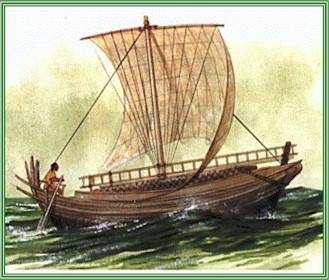
In 1900 a sponge diver called Elias Stadiatos discovered the wreck of an ancient merchant ship off the tiny island of Antikythera near Crete. The corbita, dating from the first century B.C., was heavily laden with treasure of all kinds, original bronze life-size statues, marble reproductions of older works, jewelry, wine, fine furniture and one immensely complicated scientific instrument.

The Antikythera mechanism was originally housed in a wooden box about the size of a shoebox with dials on the outside and a complex clockwork assembly of gears inscribed and configured to produce solar and lunar positions in synchronization with the calendar year. By rotating a handle on its side, its owner could read on its front and back dials the progressions of the lunar and synodic months over four-year cycles. The device has been estimated to be accurate to 1 part in 40,000.

The bronze gearing, remarkable enough on its own right, also contains a further innovation that would not be reinvented until the 19th century, the differential gear. The differential was used to calculate the phases of the moon by subtracting the moon's motion from that of the sun's. This level of sophistication allows us to say without fear of exaggeration that the Antikythera mechanism was an early kind of analog computer.

The device is also thought by some to have been able to model the motion of the five planets using the epicyclical model of planetary movement around a fixed earth devised by Apollonius of Perga and Hipparchus of Rhodes (later superceded by the heliocentric model of Copernicus).

It's been said that the Antikythera mechanism actually dropped and sank twice. The second submersion came after a comprehensive analysis of Antikythera mechanism was done by Derek de Solla Price (see Scientific American June 1959 and Gears from the Greeks: the Antikythera Mechanism: a Calendar Computer from ca. 80 B.C. 1975). Since then surprisingly little scholarly attention has been paid to what is surely the most exciting relic of advanced ancient technology that we have in our possession. After one hundred years, our estimation of the scientific and technology of the ancient Greeks needs to be be seriously revised.

"Suppose a traveller carried into Scythia or Britain the orrery recently constructed by our friend Poseidonius, which at each revolution reproduces the same motions of the sun, the moon, and the five planets that take place in the heavens every day and night, would any single native doubt that this orrery was the work of a rational being?"

-- Cicero

Thursday, September 19, 2002

Warp drive in our lifetimes? Not bloody likely, but CERN researchers have managed to isolate 50,000 atoms of anti-hydrogen. As any trekkie (trekker?) knows, matter and anti-matter annihilate one another to create pure energy, but researchers are interested in discovering whether anti-hydrogen has the same physical characteristics as hydrogen.

Tuesday, September 17, 2002

The Roman Empire: from 1 AD until the fall of Byzantium

This site has simply the most exquisite colour maps of the Roman Empire I have been able to find anywhere on the net. If you thought the Roman Empire ended when the Goths sacked Rome in 476, then think again. Technically, the Roman Empire ended in 1453 with the fall of Constantinople to the Turks. These maps cover everything in between including the rise of the Carolingian Holy Roman Empire.

I actually found these maps some years ago, but then lost the link. Thankfully I was able to use Google's image search to relocate them. There are maps here that are optimised for slow links but I have to say that whether or not you are laboring under a 56K modem, you really oughta go for the big 'uns! Each map is about 250 KB.

There's plenty here for an history nut like yours truly to gawk at for hours.

Here they are for your viewing convenience:
1 AD 100 AD 200 AD 300 AD 400 AD 500 AD 600 AD 700 AD 800 AD 900 AD 1000 AD 1100 AD 1200 AD 1300 AD 1400 AD 1500 AD

Carthage must be destroyed!

"Cato began to urge that the only sure defense against a resurgent Carthage was to destroy it. Rome would never be safe so long as Carthage stood. He made a campaign of it: Carthago delenda est! -- Carthage must be destroyed! In the 150s [BC] this was Cato's slogan, repeated endlessly. At parties he would bring it up -- Carthago delenda est! In the Senate he might be speaking on any subject, but always found a way to work in his slogan: the harbor at Ostia should be expanded . . . and Carthage must be destroyed! the appointment of Gaius Gaius to provincial governor should be approved . . .and Carthage must be destroyed! A vote of thanks to a loyal tribal chieftain . . . and Carthage must be destroyed!"

A brief but extremely readable account of the Punic Wars between Rome and Carthage. The defeat of Carthage was a critical turning point in Roman history it gave Rome mastery of the Mediterranean and in effect transformed it from a tiny republican city-state into a mighty empire.

Monday, September 16, 2002

Twenty years ago today

"The Commission determined that the massacre at Sabra and Shatilla was carried out by a Phalangist unit, acting on its own but its entry was known to Israel. No Israeli was directly responsible for the events which occurred in the camps. But the Commission asserted that Israel had indirect responsibility for the massacre since the I.D.F. held the area, Mr. Begin was found responsible for not exercising greater involvement and awareness in the matter of introducing the Phalangists into the camps. Mr. Sharon was found responsible for ignoring the danger of bloodshed and revenge when he approved the entry of the Phalangists into the camps as well as not taking appropriate measures to prevent bloodshed. Mr. Shamir erred by not taking action after being alerted by communications Minister Zippori. Chief of Staff Eitan did not give the appropriate orders to prevent the massacre. The Commission recommended that the Defense Minister resign, that the Director of Military Intelligence not continue in his post and other senior officers be removed."

--- Israel's Kahan Commission of Inquiry into the massacre at the Sabra and Shatilla refugee camps in Beirut which occurred between the 16th and the 18th September 1982
Is it not of national importance that we prepare all our young to be informed and active citizens? Look at the youth vote, or at the low esteem in which politicians are held generally-partly your own fault in parliament, and partly the cynicism of the press. This spills over into a contempt for political activity in general and for acting politically-negotiating, compromising, mediating. We are the last country in the civilised world to think that we need not prepare our young to act like citizens but only for the worlds of work, personal success or consuming pleasures.


Conversely:

You say that young people ought to be interested in the society around them. Who could disagree? My point is that the virtues of citizenship are already delivered by good schools in a variety of lessons and other activities. If good schools can do this, don't interfere with them. If bad schools can't or won't do it, let the inspection process point this out, and provide them with materials which they may want to use. Instead of that, I foresee the introduction of another period rather akin to an uninspiring religious studies lesson, which leaves no trace with the pupils once it is over. Anyone who thinks that making a difficult subject compulsory is the way to inspire young people should track the downward slide in religious observance in this country.


Bernard Crick faces off with Damian Green in a debate concerning the teaching of "Citizenship" in British public schools. Both make good points, but where do you stand? Does the teaching of these classes make better citizens? More active students? Investment in better politicians for a better government?
What smart urbanists want is to have a full range of society within neighborhoods. You need people who are CEOs, and people who are secretaries. You need school teachers, and you need somebody to deliver the pizza. Society doesn’t work unless there are all kinds of people around, in relatively close proximity. Any society that has only one income level is dysfunctional. And, by the way, the great thing about the American system is that everybody can actually aspire to rise to the level of “gentry.” We don’t have the generalized envy and resentment that you find in many other countries.

From an interview with Andres Duany.

BIN LADEN "DEAD"

On the 24th night of Ramadan there were scary explosions in the place where Osama bin Laden's cave was. It was completely erased, destroyed by an enormous 52ft missile. There is no doubt that Osama bin Laden died. Read on...

Sunday, September 15, 2002

Panoramic Maps of the USA


Aero view of Tulsa, Oklahoma, 1918.

Browse maps by geographic location

The Monkey King

Here is an illustrated version of the prelude to a "Journey to the West" by Wu Ch'eng-en (1500?-1582) a classic Chinese story which is about the fantastic adventures of an immortal Monkey, a Buddhist monk called Tripitaka and a pig spirit, a sea monster and a dragon who make their way to India in order to collect sacred Buddhist texts for the Emperor of China.

This story remains extremley popular in China and throughtout much of east Asia. Monkey's rebellious hell-raising spirit has delighted generations of readers and it has been made into countless movies, animated cartoons and (most notably) a really terrific televison series by the Japanese. Translations of the entire story can be found here and I can highly recommend the very readable abridged version by Arthur Waley.

The part of the tale related here recounts the birth of Monkey, his acquisition of magic powers and immortality, his rebellion against the gods, his capture by the Buddha and his subsequent punishment by burial under a mountain. The main story begins 500 years later when the monk Tripitaka discovers the imprisoned Monkey and sets him free to act as his guide for his journey to India.

One day the Monkey King turned sad. He worried that he would die and would not enjoy the pleasures of life forever. One of the monkeys had read the King's mind and he said, "In the world, only Sages, Immortals and Buddhas live forever. "On hearing these words, the Monkey King's sadness turned to joy. He said, "I will try to find immortality wherever it is. I shall set out tomorrow."

Read the Introduction or the rest of this classic here:
Page(s):

1 2 3 4 5 6 7 8 9 10 11 12 13 14 15 16 17 18 19 20
21 22 23 24 25 26 27 28 29 30 31 32 33 34 35 36 37 38 39 40
41 42 43 44 45 46 47 48 49 50 51 52 53 54 55 56 57 58 59 60
61 62 63 64 65 66 67 68 69 70 71 72 73 74 75 76 77 78 79 80
81 82 83 84 85 86 87 88 89 90 91 92 93 94 95 96 97 98 99 100

Thursday, September 12, 2002


The three-digit winning number from last night's "Numbers" Lottery in New York.
This just in from MaxSpeak

EU DEBATES MEASURES TO RESTORE ORDER AND DEMOCRACY IN FLORIDA.

[From Le Monde et La Merde, September 12, 2002] BRUXELLE

The storied war cabinet of the European Union continued to meet today, deep in deliberations on restoring order to the rapidly deteriorating situation in Florida, U.S.A. Sources said debate bogged down initially over disagreements over whether order had actually prevailed in the first place.

EU Minister of Information & Household Appliances Bo Husqvarnaquistholm from Sweden reported to the group on the present situation: "We have an across the board breakdown of the state's social and public services. The Child Welfare Department has been taken over by people who believe in flogging disobedient minors. Law enforcement agencies let perpetrators of drug offenses walk away from arrest. They prefer to focus on conducting surveillance on houses of prostitution. Election officials are ignorant of election laws. Election workers are ignorant of how to administer elections. Governor Jeb Bush is ignorant of the fact that elections are a state government responsibility. Dogs and cats have begun to try to eat each other, while alligators are eating them both. Janet Reno evades apprehension and is liable to eat anything."

Minister of State Stability Sylvio Pecorino of Italy summed up the governance problem. "Legitimacy of the state has evaporated, given the debacle of the 2000 election, compounded by this week's repeat performance. The counties don't recognize the governor and the governor can't find the counties. We must act to bring self-government to the workers, peasants, and fisherpersons, both gay and straight. Regime change is imperative."

Ministrix of Tough Love Helga Von Weinerschlanger laid out the military options. "We can have an allied force of French Foreign Legion, Swiss Guard, and Italian Carabinieri there in 48 hours. They can liberate the state in several days. Then a Dutch Psycho-Active Warfare unit can move in and dose the population into a state of blissful repose while we mop up isolated bands of Christian and Jewish fundamentalist extremists."

The Belgian Convenor of the group, Leopoldo Poirot, twirled his linguini for a moment and asked, "But is it legal? Shouldn't we go to the United Nations first? Why not start with election inspections? What's Jimmy Carter doing these days?"

French Minister of Deconstruction and Semiotics Petit Labelle objected, "Absoluement Pas! If we do the U.S. will automatically veto and we will be stymied. Meanwhile Floridians will continue to suffer. Better to intimate broad consensus and promise to form a gigantic 'coalition.' If someone says nobody supports the action, we say they will really be glad to see us act, even if they are reluctant to say so."

The Portuguese Minister of Wine and Wool, Vino Verde, offered a conciliatory idea: "We can have inspections first. We just make sure they fail; that gives us the pretext to invade."

The only residual issue was the delicate one of finance. The Spanish Minister of Platas asked, "Our per capita income is lower than Mississippi's. How can we expect to pay for this enterprise?"

Swiss Minister of Numbered Accounts Franz Lucre replied, "Simple. We drill for oil off the coast, turn the Everglades into a condominium development, and nationalize Disney World."

The assembled agreed to have their nationalized television networks immediately begin to propagandize on behalf of the mission. Dissident commentators carefully chosen for their flaccidity would be engaged to argue the anti-EU position, after having the crap kicked out of them for about forty minutes. Upon completion of the operation, it would be submitted to the European Parliament for approval.